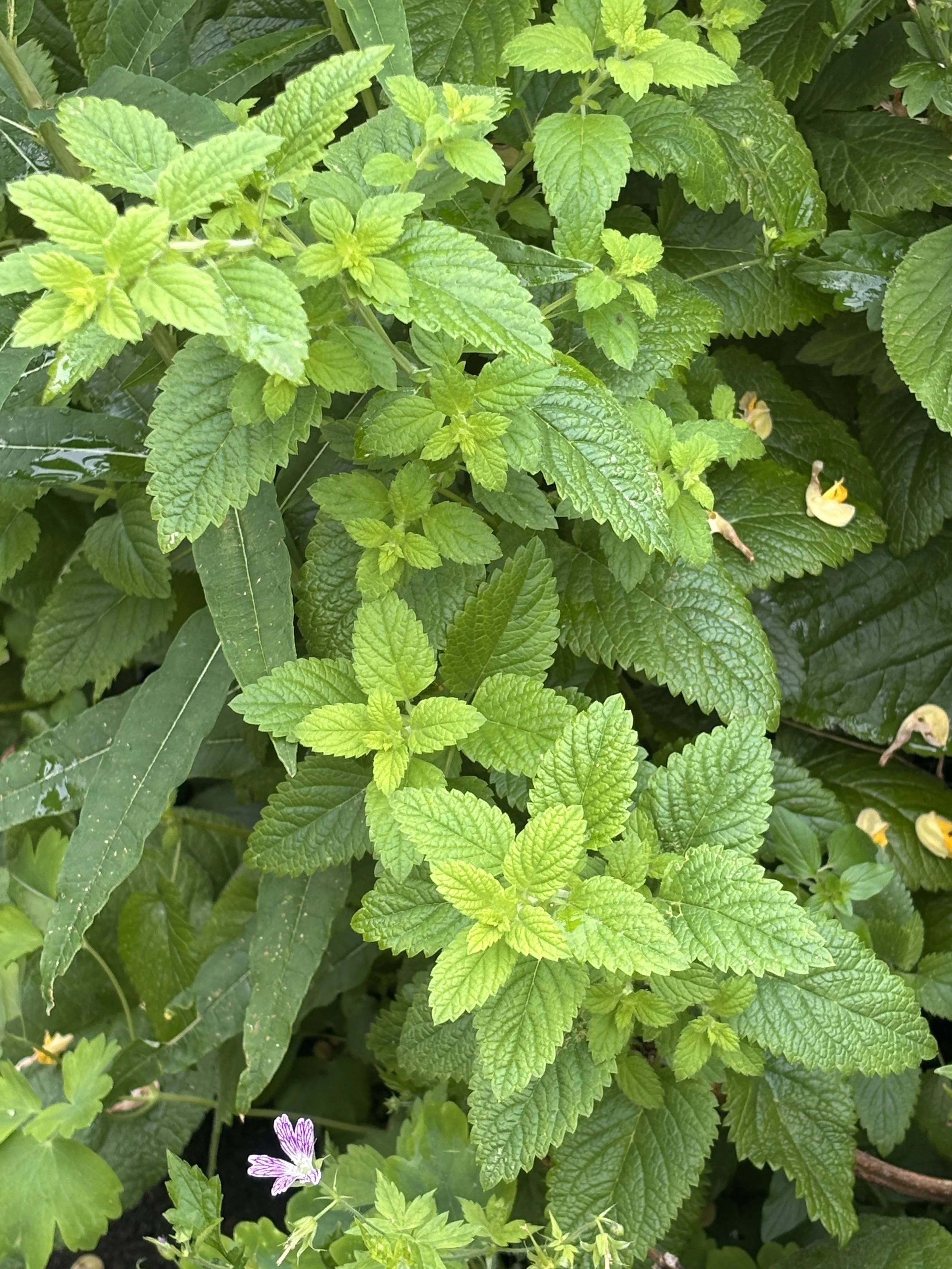
Mindful snorkel & sketch
-
A bridge between the preparations, briefing and practicalities, and the flowing feeling of being in the sea. From doing to being.
A breathing space which prepares you: from acknowledging to gathering to expanding your awareness. Creative exploration of the living world you are part of.
-
Exploring the seascape through awareness of all the senses: seeing the patterns, shapes and colours of the marine life and the sea bed, hearing your own breath in the snorkel and being aware of your body in this watery world, feeling the push-pull, ebb and flow.
Observing, identifying and tasting the macro-algae and other coastal herb species, sharing inspiration and ways to connect with the seaweeds in your kitchen and other creative practices.
-
Being out in the fresh air / cold sea sometimes takes a leap: to gather your things and make the time and space for this.
But, just spending a short time in nature, engaging your creative spirit, and appreciating the beauty of the coastline is good for our heart and soul.
We hope you find moments of connection and inspiration, and enjoy this invitation to expand on the possibilities of your creative practices.… maybe this is just a beginning!
On this page we have gathered the reflection and recipes from the Mindful Snorkel & Sketch half-day experience at North Berwick’s east beach as part of Fringe by the Sea 2026.
We hope this is just a beginning, an introduction… and you enjoy many more snorkels & sketches!
Reiki & Remedy monthly Almanac
If you enjoyed these reflections and recipes, maybe you’re be interested in subscribing to the Reiki & Remedy monthly ‘almanac’ — a curated collection of reiki-based practices, herbal recipes and remedies, a bit like we shared on the shoreline.
Every month I’ll email you a link to a post, including a full audio recording so you can tune in… to tune out.
You don’t need any reiki experience or training. These mindful energy and nature connection practices are accessible and intended for all to enjoy. If you are curious or have questions, drop me an email liz@reikiremedysanctuary.co.uk
Foraging seaweeds
In order to forage seaweed (without getting wet!), check a tide table and head out at the lowest point of the low tide. I usually plan to start walking out an hour before low tide, so that I can go quite far and access the deeper growing seaweeds - such as Oar Weed which is one of the Kelp family species - and still be back on dry land without getting caught up in the rising tide.
To forage seaweed, bring a basket to carry the seaweed home in, and some small scissors.
It’s really important not to be tempted to pull the seaweed; it may look tough, but seaweed habitats are fragile and if you cut it with scissors it’s more like pruning than uprooting. Using scissors allows the seaweed to continue growing from its holdfast.
Preparing & storing
Generally, I store seaweed in a dried form. At home, rinse the seaweed very well under cool running water. Shake out in a colander and pat dry with paper.
For ‘thin’ seaweeds like Laver (nori), Gutweed and Sea Lettuce, you can lay out the seaweed in a single layer on a baking tray or cooling rack to thoroughly air dry.
For ‘thicker’ seaweeds, like Sugar Kelp or Sea Spaghetti you’ll need to actively dry it, in the oven at a very low setting (60 - 65oC) until completely dry. You should be able to snap / crumble the seaweed between your fingers; it will take a few hours. If you have a dehydrator, this is very useful to speed up the process.
Add dried seaweed to baking, soups, stir-fries etc., or you can grind the dried seaweed in a food processor or pestle & mortar to make a seaweed salt which adds a wonderful umami flavour to food. Always store in air-tight glass jars to retain the aroma and flavour.
I tend to store all herbs including seaweeds as ‘chunky’ as possible, and only powder when I’m ready to use it. The smaller the particle size, the more quickly the herb / seaweed will oxidise and loose its flavour and vitality.
The other way to store seaweeds is to freeze it until you’re ready to use. Rinse thoroughly under running water, and freeze in airtight containers. This is how I like to store Sea Spaghetti - then you can steam, stir fry or add to noodle soups straight from frozen.

Kelp Crisps
One long, freshly storm cast Sugar Kelp (Saccharina latissima) frond (approx. 100g), or
Similar weight of small sections of Oar Weed (Laminaria digitata) (harvested well above the holdfast and cut far up the stipe to allow regrowth).
2-3 tablespoons maple syrup
Rinse the Sugar Kelp / Oar Weed to remove any sand, but don’t rub off the mannitol (the slippery coating on the kelp’s surface). Cut into rectangles about 4-5cm long.
(Discard any pieces that show signs of decay. You can use the off-cuts in the garden as an excellent fertiliser by soaking in water for a few days and use the ‘tea’ as liquid fertiliser)
Drizzle over the maple syrup and toss to coat evenly.
Bake in a pre-heated oven at 180˚C for 15 minutes, shaking to turn every 5 minutes. The crisps will turn green and crunchy - and can burn quickly so keep a close eye! The exact baking time will depend on the thickness of the kelp which is variable.
If using an air fryer, the same temperature and timing is used however I find the air fryer makes a crisper crisp!
Eat immediately, they go chewy if you try to store them.

Sea Buckthorn Biscuits
These are an almond-based biscuit with a delightful zing! Gluten and dairy free, although you can adapt the recipe to replace the rice flour with wheat flour. I use rice flour to cater for diverse dietary requirements, and the shortbread like texture works well with the almond and Sea Buckthorn (Hippophae rhamnoides).
1 egg
200g almond paste (e.g. ready-made marzipan)
100 ml fresh Sea Buckthorn juice
2 tbsp unrefined organic sugar
250g rice flour / 200g plain organic flour
Pre-heat the oven to 170˚C.
In a large bowl combine the egg, almond paste, Sea Buckthorn juice and sugar, and knead well. Roll your sleeves up, it’s juicy! You can give the mix a quick whizz with an electric whisk to get it really smoothe.
Sieve in the flour, and fold together. You’ll have a very loose dough. Make little mounds on a well-oiled baking sheet, and bake for 10-15 minutes until golden.

Mermaid biscuits
This recipe is taken from Fiona Bird’s book Seaweed in the Kitchen, where you’ll find many uses for various seaweeds, as well as tips on foraging and identification. These biscuits are really easy to make with kids; get creative with the cutter shapes!
Take care when harvesting the Gut Weed (also called Mermaid’s Hair) for these biscuits. The Ulva species’ holdfast is very small, so it is easily ripped off the rock; use scissors and be gentle!
3 tsp Sea Grass (Ulva intestinalis), dried and roughly chopped
125g unsalted butter
75g unrefined caster sugar
180g plain organic flour
1 egg yolk
Cream together the butter and sugar in a large mixing bowl.
Add the flour and chopped Seaweed, and fold together binding the dough with the egg yolk. Work the dough together then pop the ball into the fridge for about 20 minutes to chill.
Flour the work surface, then roll the dough out to 1cm thickness. Using a cookie cutter, cut out biscuits and lay on a non-stick baking sheet.
Bake in a pre-heated oven for 12 minutes, at 180˚C.
Remove from the oven and leave them on the sheet for a couple of minutes, before transferring to a cooling rack. Once cool, store in an airtight tin.

Sea Zest seasoning
‘Sea Zest’ combines three highly nutritional plants for a tasty herbal seasoning that adds umami flavour to vegetables, meats, sandwiches, and salads.
3 parts Sesame seeds: an excellent source of the minerals including copper and manganese, and a good amount of magnesium, calcium, iron, phosphorus, and zinc.
1 part dried, coarsley ground Kelp (Nereocystis luetkeana): contains a vast amount of nutrients. According to the authors of Vegetables from the Sea:
“All the minerals required for human beings, including calcium, sodium, magnesium, potassium, iodine, iron and zinc are present in sufficient amounts. In addition there are many trace elements in seaweeds.” Kelp also has significant amounts of vitamins A and C, as well as B1, B2, B6, Niacin, and B12.
1 part dried, coarsley round Nettle leaf (Urtica dioica): Nettle is one of our most nutritious plants, containing high amounts of calcium, magnesium, chromium, and zinc. Dry the leaves and blitz them when you want to use them. If you grind them in advance, it will oxidise and you’ll loose a lot of the herbal benefits.
Lightly toast the sesame seeds, then grind to a powder in a food processor.
If you’re starting with fresh herbs, dry them very well and pulse to a granulated consistency in a food processor.
Combine the ingredients in a large bowl then store in air-tight containers / jars. Because sesame seeds are high in oils, this seasoning should be stored carefully so it doesn’t go rancid. I find it is best stored in the fridge and used within a month.
Seaweed Salt
To make a flavourful salt, combine sea salt, dried seaweed and dried granulated Rosemary. I have used a combination of Pepper Dulse, Laver (nori) & Serrated Wrack.
2 parts coarsely pulsed dried Seaweed
1 part sea salt
1 part coarsely pulsed dried Rosemary (Rosemarinus officinalis)
Mix together in a bowl, and store in a glass jar to sprinkle. It’ll add a refreshing, bright umami flavour and is epic on chips!
Snorkel & Sketch mindful ‘breathing space’
INTRODUCTION
We're going to take a pause to prepare ourselves to immerse into the moment, the sea-scape, this experience. A breathing space.
If you've got time to breathe, you've got time to meditate.
Let’s clear a space between all the DOING... and move into a feeling of BEING.
Being in awareness of the sensations of your whole body, in a wonderful watery world.
I'd like us to be able to bring a real sense of mindfulness to this experience:
Using all our senses of perception: feeling, flowing, recording, creating.
ACKNOWLEDGING (body)
We'll start by settling and grounding the posture of the body. Taking up a dignified, aware position in your body which feels easy and comfortable to you, begin by noticing your body sitting or standing on the sand. Feel your body, and then sink down into that feeling, and be received and supported by this sandy beach.
If you like, you can lower your gaze or close your eyes, and just feel your body belong to the earth.
See in your mind's eye the stretch of sandy shoreline. As it forms this bay, and then wraps around to form the West Bay, and becomes a beautiful shoreline that we sit on now, gathering ourselves, settling our body, grounding ourselves.
A body of this earth.
GATHERING (breath)
Now notice how your body is breathing itself. In this moment.
No need to make any changes or adjustments. Like when you're snorkelling, at first aware of the mask on your face and the snorkel itself, then you just notice and hear and feel your self - your body - breathing. Just notice how your body breathes itself.
Breathing in, breathing out. In, and out. In... And out... In, and out.
Breath like the ebb and the flow of the sea.
No need to change it. Just bringing awareness to your breath.
Awareness of your body anchored to the earth. Awareness of your breath. Moving, flowing, like the waves.
EXPANDING AWARENESS (mind)
And now, we come towards experiencing and being in the present moment, a place where the mind slows and settles.
From this place of connection with your body and with this place. The mind can now expand.
Your senses sharpen. Your whole body is open to notice and feel.
A mind as clear as the sky. As we sit here. With no preference, no predetermined expectation of what we'll see, just openness.
Openness to see what's there. To feel what's there.
This openness allows us freedom to express and create.
Not judging your mark making, not judging your experience.
Accept the cold, accept the movement, go with the flow.
Notice what you notice, but rest your mind on what you see and feel.
Create a space of flow to allow your mind to settle and your whole being to experience.
How does it feel to just go with the flow, to release and let go?
CLOSE BREATHING SPACE:
Body of this beautiful beach,
Breath of the sea's ebb and flow.
Mind, like the sky. Open and limitless.
When you're ready, use your breath and the sensation of the ground to anchor you back in the place and time.
Ease your body back.
You are ready to explore, with all your senses.
Your mind, body and breath are calm and open,
to receive all the beauty and good of today's experience.

Read around the health benefits of Kelp, and you’ll discover many uses and a wide range of actions in holistic health and wellbeing. A detailed description of the properties of Kelp as a medicinal herb can be read on the Wild Rose College of Herbal Medicine page, and is well worth a read.
Kelp is considered deeply nourishing and it is said that just eating 5g / day can help your body in all the following ways:
Eating just a small amount of kelp daily helps tonify many of our body systems,
It can help heal heart and circulation related problems,
Daily use also provides optimum nourishment for our hormonal, lymphatic, urinary and nervous systems,
Kelp enhances response time and strength of our immune system,
It helps loosen stiff joints,
Kelp helps the digestive system, soothing and nourishing distressed surfaces and helping maintain a healthy balance of digestive yeasts and bacteria,
It also helps with elimination of radiation, pollutants, and heavy metals if eaten regularly.
Now that's a lot of health claims!
The best approach as always in herbalism is to explore the plants / macroalgae and connect with them, and feel for yourself if it has any benefits to your sense of health and wellbeing.
Listening to our body, and feeling how it responds to herbs we use to support healthy minds and bodies is at the heart of holistic herbalism.
Deep dive into Kelp
Coastal kitchen inspiration
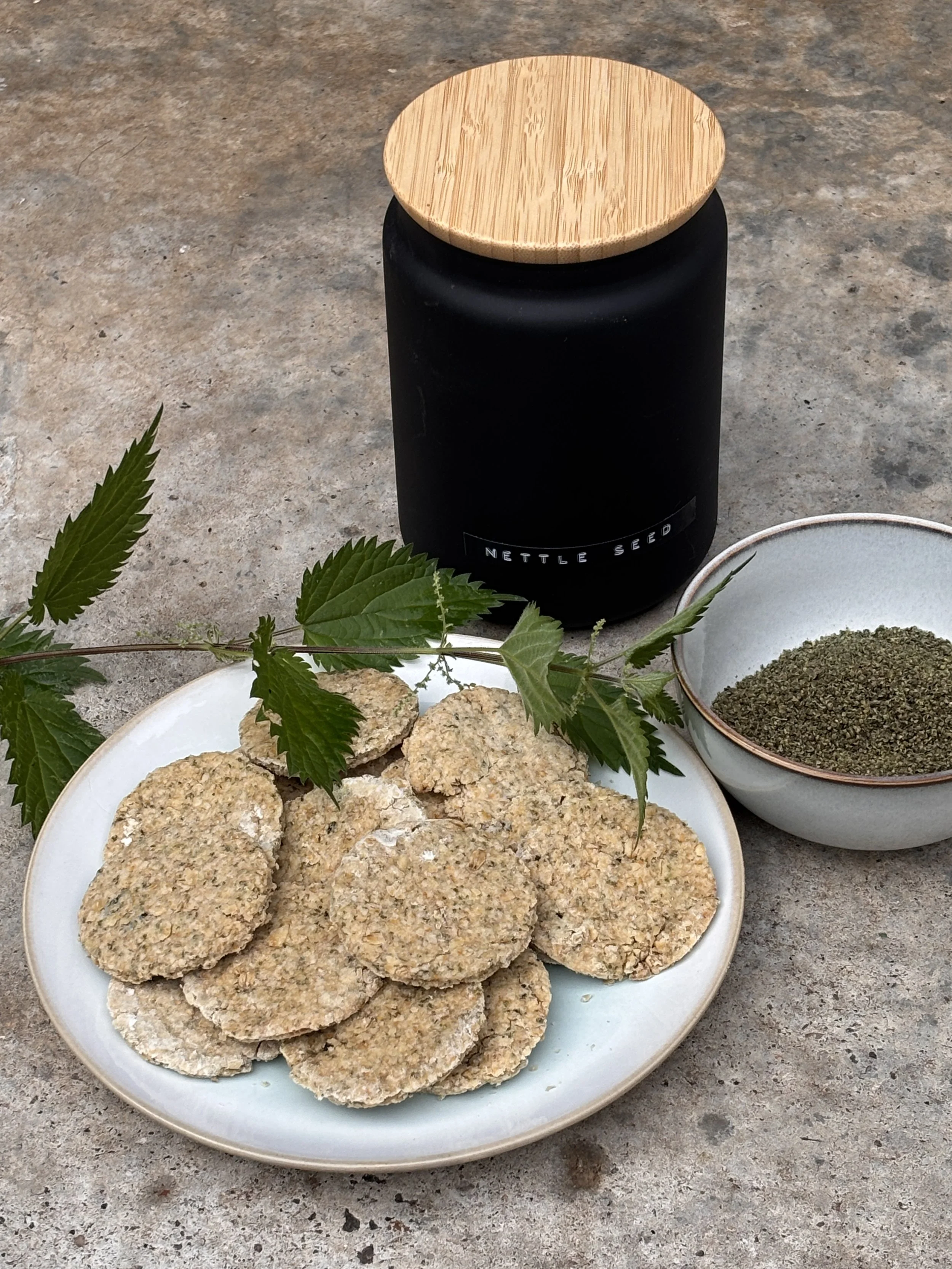
Level up oatcakes!
300g porridge oats
180g plain flour
80ml olive oil
2 sheets Nori / handful of Laver seaweed dried and toasted
3 tbsp. Nettle seeds
1 tsp. sea salt
Water, to bind and form a stiff dough.
Combine all the ingredients in a large bowl, with just enough water to bring the mixture together into a stiff dough. Knead for a few minutes to make the dough more supple.
Roll out on a floured surface to a few mm thickness, and cut out with a cookie cutter, placing the oatcakes on a lined baking tray.
Back in a pre-heated oven at 180˚C for 25 - 30 minutes. Remove from the oven and leave to cool on a rack, before storing in an airtight container.
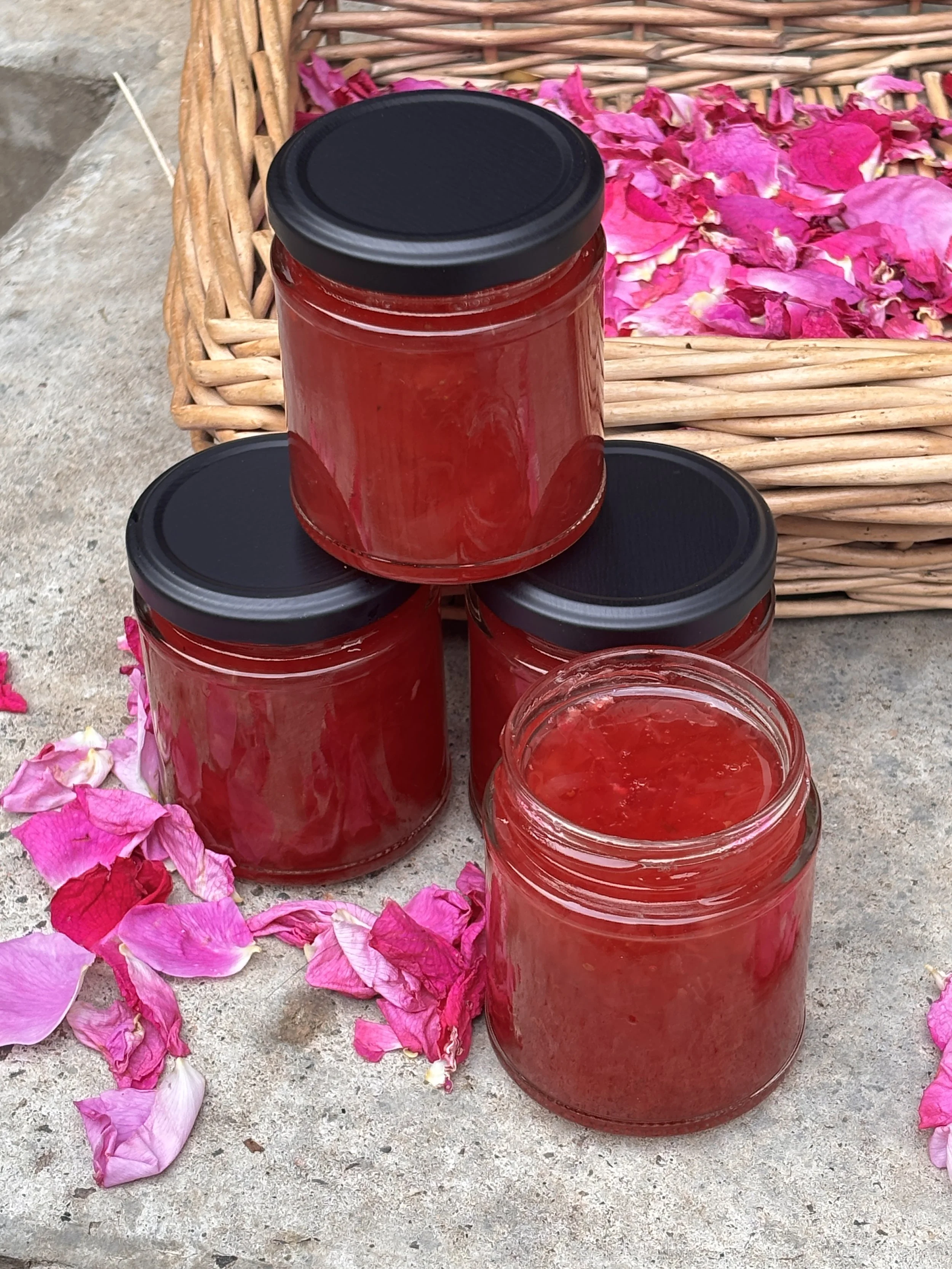
Rose-petal jam
In June and July, you can often find wild roses growing along the coastline. Rosa rugosa is also known as ‘sea tomato’ because of the large rosehips it produces in early Autumn, and I find this is the best wild growing Rose species to use for jam. At home I use Rosa gallica, Apothecary Rose.
500ml water
900g jam sugar (or caster sugar, and add pectin)
100g fresh Rose petals
1 small punnet of strawberries
2 small or 1 large cooking apple
Juice of 2x lemons
1 tbsp. cornstarch (optional)
In a large pan, combine the water and the jam sugar and bring to the boil.
Meanwhile, pull all the petals off the flower heads;
Peel and finely dice the cooking apple;
Hull and dice the strawberries.
Add the petals, strawberries and apples to the large pan and simmer on a rolling boil for 20 - 30 minutes. Add the lemon juice which has had a tablespoon of corn starch mixed through it, and cook for a further 10 minutes.
Jar immediately. Shelf stable for 4-6 months.
Lemon Balm cooler Honey syrup
1 cup raw honey
200ml water
1 cup Lemon Balm leaves
1 cup Peppermint leaves
1 cup Elderflowers
Bring the water to the boil, and pour over the herbs in a heat-proof ceramic bowl. Leave the herbs to infuse the water for 1-3 hours; you are making a very strong herbal infusion / tisane.
Remove the herbs by pouring the infusion through a sieve.
Add the honey to the infusion and stir to dissolve. If it is slow to dissolve, you might warm the infused water very gently, to no more than 35oC. Bottle, and label,
Store in the fridge, for up to 10 days.
Add a splash to fizzy water for a refreshing summer-time drink, or drizzle over yogurt or pancakes.